
Ending Heritable Disease by Scaling Genomic AI, Starting With Embryo Selection
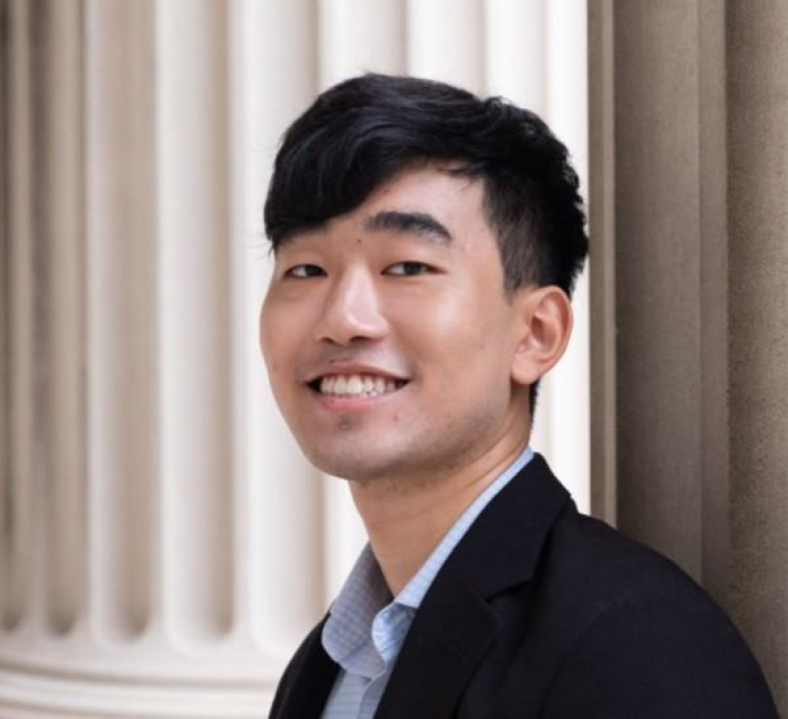
John Yang
Co-Founder & CEO
TL;DR: Reticular is scaling genomic AI for embryo screening, enabling far better polygenic prediction for IVF families today, on the path to curing heritable disease tomorrow.
The problem
Every year, hundreds of thousands of IVF patients pay thousands to screen their embryos for conditions like Down syndrome and cystic fibrosis. But only a couple hundred screen for heritable polygenic diseases like schizophrenia and type 1 diabetes, even though these conditions collectively affect tens of millions of American families.
Frankly, that's largely because polygenic scores get dismissed as pseudoscience by couples and clinicians alike. And we think that's fair.
The best polygenic scores in clinics today are a generation behind. They're statistical models, not neural networks, that use so little compute they can be trained overnight on a MacBook.
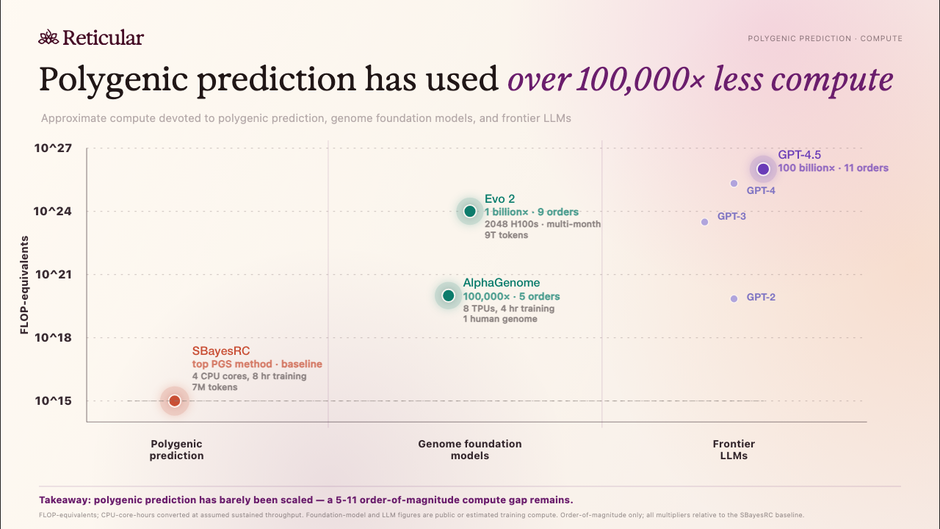
Meanwhile, genome foundation models like AlphaGenome and Evo 2, trained with over 100,000× more compute, are starting to find real applications in clinical genomics.
We're closing that gap. We think it unlocks a step change in prediction, and families going through IVF right now should be the first to benefit, helping end heritable disease in their own families.
The solution
We're live and taking customers today.
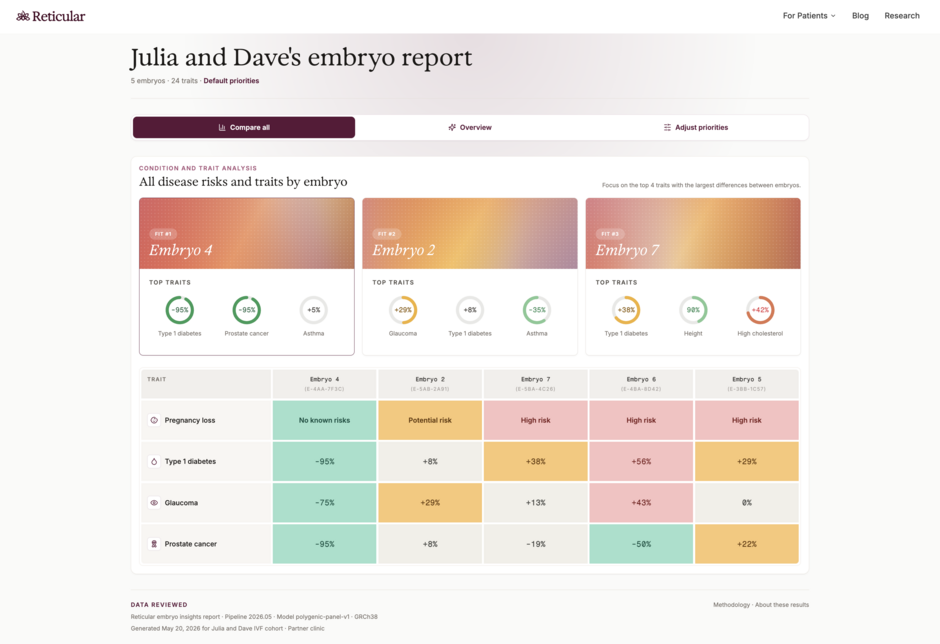
If you've already done genetic testing for IVF, Reticular can rescreen the embryo data you already have, with no new biopsy, for everything your original PGT-A report left out:
- disease risk (e.g., schizophrenia, type 1 diabetes)
- heritable causes of pregnancy loss
- opt-in traits you're curious about
Every report comes with genetic counseling support, so no one has to interpret it alone. It's a flat $1,000 for all your embryos, across every cycle, with no per-embryo pricing.
How we came to this problem
John and Christina come from MIT and Stanford. We've competed in international Biology Olympiads, counseled patients at Orchid and Nucleus, and raised a $4.3M seed round led by CRV and BoxGroup.
Before Reticular, we built interpretable AI for biology, publishing three peer-reviewed papers (NeurIPS, ICLR, ICML) with MIT and Oxford. Embryo screening delivers clear value to couples today, and it's a direct extension of that research mission.
Long-term, embryo screening is just the first wedge into a much bigger problem: understanding what actually drives heritable disease.
By building on the rapid progress in biological foundation models to sharpen polygenic prediction, we aim to find the causal genetic signals behind these conditions and turn them into drugs that cure hundreds of heritable diseases afflicting billions worldwide.